How Much Heat Can Solar Window Film Really Block?
Homes and businesses across the Blue Ridge and Southern Appalachian region deal with intense seasonal sun exposure through untreated glass. From west-facing living rooms in Asheville to south-facing storefronts in Greenville and sun-loaded office buildings in Knoxville, unprotected windows let in far more heat than most people realize. That heat drives up cooling costs, creates hot spots near windows, and puts extra strain on HVAC systems throughout the warmer months.
Solar window film promises to block a meaningful amount of that heat, but the advertised performance numbers can be confusing without context. What does "79 percent solar energy rejected" actually feel like in a room? Does darker film always perform better? And is the difference noticeable enough to justify the investment?
A quality solar control window film can be a genuinely smart upgrade for many homes and businesses, but the actual temperature difference you experience depends on the film type, window orientation, existing glass, and the size and layout of your building. This guide explains exactly what the numbers mean and what you can realistically expect.
Table of Contents
- How Much Heat Actually Enters a Home or Building Through Glass
- What "Solar Heat Gain" and "Total Solar Energy Rejected" Actually Mean
- How Solar Window Film Physically Blocks Heat
- How Much Heat Quality Solar Film Blocks in Real-World Conditions
- Residential Heat Reduction: What Homeowners Can Expect
- Commercial Heat Reduction: What Business Owners Can Expect
- Other Factors That Affect How Much Heat Film Actually Blocks
- Solar Window Film Performance Comparison
- Frequently Asked Questions
- Conclusion
How Much Heat Actually Enters a Home or Building Through Glass
Glass is one of the least efficient barriers against solar heat in any building envelope. Studies from the U.S. Department of Energy consistently identify windows as a major source of heat gain in residential and commercial buildings, accounting for roughly 25 to 30 percent of total cooling energy use in many climates.
In the Southern Appalachian region, the sun angle and intensity during late spring through early fall means that south- and west-facing windows can transmit enormous amounts of solar energy into interior spaces during peak hours. A standard single-pane window transmits nearly all of the solar radiation that strikes it. Even standard double-pane insulated units, while better for conductive heat transfer, do little to reduce solar radiation without a special coating.
The Three Ways Glass Transmits Heat
Understanding how heat moves through glass explains why solar film is effective. Glass transfers heat in three ways: conduction (direct temperature transfer through the material), convection (air movement across the glass surface), and radiation (infrared energy transmitted directly through the glass). Solar film primarily addresses the radiation component, which is the dominant heat transfer mechanism during sunny daylight hours and the one most responsible for overheated rooms near windows.
Why Window Orientation Matters in This Region
In Asheville, Knoxville, Greenville, and surrounding areas, west-facing windows receive the most intense afternoon heat load during the summer months. South-facing windows have high solar exposure throughout the day during spring and fall. East-facing windows get strong morning sun. North-facing windows have the lowest solar heat gain overall. Knowing which windows face which direction is critical to understanding where solar film will deliver the most noticeable impact.
What "Solar Heat Gain" and "Total Solar Energy Rejected" Actually Mean
Two performance metrics come up most often when evaluating solar window film: the Solar Heat Gain Coefficient (SHGC) and Total Solar Energy Rejected (TSER). Understanding both helps you evaluate product claims accurately.
Solar Heat Gain Coefficient (SHGC)
The SHGC is a number between 0 and 1 that describes how much solar radiation passes through a window or film and enters the building as heat. A lower SHGC means less solar heat is transmitted. Untreated clear glass typically has an SHGC of 0.86 or higher. A high-performance solar film can reduce that to 0.25 or lower, meaning that only 25 percent of the solar energy that would otherwise enter is actually transmitted.
Total Solar Energy Rejected (TSER)
TSER is the percentage of total incoming solar energy that is rejected by the film. This includes reflected solar energy and absorbed energy that is re-radiated outward rather than transmitted inward. A film with a TSER of 79 percent rejects 79 out of every 100 units of solar energy that strikes it. This is the number most directly tied to how much cooler a treated window will feel compared to an untreated one.
Infrared Rejection
Infrared (IR) radiation is the portion of the solar spectrum most directly felt as heat. Some premium films, including products in the Vista line, are specifically engineered to reject a high percentage of infrared radiation. A film that rejects 95 percent or more of infrared energy will dramatically reduce the radiant heat felt near a window even when the visible light transmission remains relatively high. This is why premium ceramic and nano-ceramic films can feel cooler than their visible darkness suggests.
How Solar Window Film Physically Blocks Heat
Solar window film blocks heat through a combination of reflection, absorption, and selective transmission. The specific mechanism depends on the film technology used.
Dyed and Standard Films
Basic dyed films work primarily through absorption. The film absorbs solar energy and re-radiates a portion of it back outward before it can enter the room. These films can reduce heat gain, but their performance ceiling is limited because absorbed energy can still transfer inward through the glass over time, particularly in direct sun exposure over extended periods.
Metalized and Reflective Films
Metalized films incorporate a thin layer of metallic particles that reflect a significant portion of incoming solar radiation before it reaches the glass. These films can achieve higher TSER values than dyed films and are commonly used in commercial applications. Their visible appearance is more reflective, which some homeowners prefer and others do not.
Ceramic and Nano-Ceramic Films
Premium ceramic films, including the Vista solar control line, use nano-ceramic technology to achieve high infrared rejection without relying on metal layers. This means they can block a large percentage of heat-producing infrared radiation while maintaining optically clear, low-reflectance appearance. Ceramic films also do not interfere with cellular signals or wireless devices, which is a practical advantage for both homes and businesses.
How Much Heat Quality Solar Film Blocks in Real-World Conditions
In real-world conditions, a quality mid-to-premium solar control film can block between 50 and 79 percent of total solar energy entering through treated windows. Vista residential solar control film is capable of rejecting up to 79 percent of total solar energy, making it among the highest-performing options available for residential and commercial applications.
What this translates to in practical terms varies by application, but independent testing and field data consistently show that rooms with treated windows on high-exposure orientations experience measurably lower peak temperatures near the glass. In direct afternoon sun conditions, surface temperatures on treated glass can be 10 to 20 degrees Fahrenheit cooler than untreated glass, and the radiant heat felt by occupants sitting near windows is substantially reduced.
The Difference Between Film Performance and Room Temperature
It is important to distinguish between the heat reduction at the glass surface and the overall room temperature change. A room's temperature is influenced by many factors including insulation, HVAC capacity, internal heat loads, and air movement. Solar film addresses the heat coming through the glass specifically. In a well-insulated home with good HVAC, film may reduce peak temperature by 3 to 8 degrees Fahrenheit during the hottest part of the day. In a poorly insulated space or one with a large glass area relative to its volume, the improvement can be more dramatic.
Residential Heat Reduction: What Homeowners Can Expect
For homeowners in Asheville, Knoxville, Greenville, and surrounding areas, solar window film offers a practical path to more comfortable rooms without replacing windows. The impact is most noticeable in rooms that have struggled with heat on sunny days and in homes where the HVAC system runs frequently during summer afternoons.
Where Homeowners Feel the Difference Most
- West-facing living rooms and bedrooms that overheat in the afternoon
- Sun rooms and Florida rooms with extensive glazing
- Kitchen areas with large south or west-facing windows above work surfaces
- Home offices and bonus rooms above the garage where heat accumulates
- Master bedrooms with expansive glass on east or west exposures
Comfort Benefits Beyond Temperature
Homeowners who install quality solar film frequently report that the comfort improvement goes beyond just a cooler room. Glare reduction makes screen use and everyday activities near windows far more comfortable. UV blocking at 99 percent or higher protects furniture, flooring, and artwork from fading. The combination of these benefits means that rooms that were previously avoided during sunny hours become usable and comfortable throughout the day.
Energy Cost Savings for Homeowners
While the primary benefit many homeowners notice is comfort, the energy savings add up over time. By reducing the heat load on the HVAC system during peak cooling hours, solar film can contribute to meaningful reductions in cooling energy costs. The exact savings depend on the home's overall insulation, the number and orientation of treated windows, and local utility rates, but homes in climate zones similar to Western North Carolina and East Tennessee typically see measurable cooling cost reductions after treating high-exposure windows.
Commercial Heat Reduction: What Business Owners Can Expect
For commercial buildings in Asheville, Knoxville, Greenville, and surrounding areas, solar window film delivers both comfort and measurable energy savings. Vista commercial solar control film typically saves buildings between 5 and 15 percent on energy costs, making it a compelling investment for business owners managing operating expenses in sun-exposed buildings.
Why Commercial Buildings Often See Greater ROI
Commercial spaces frequently have large glass areas relative to their floor space, particularly in retail storefronts, office buildings, and restaurants with open floor plans. The heat load through untreated commercial glass can be substantial, forcing HVAC systems to work harder and longer to maintain comfortable temperatures. Solar film reduces that load directly at the source, which translates into shorter HVAC run times and lower utility bills.
Employee and Customer Comfort
Beyond energy costs, comfort matters for productivity and customer experience. Employees working near sun-facing windows in untreated spaces frequently report discomfort, glare on screens, and difficulty maintaining focus. Customers in retail or hospitality environments with harsh solar heat and glare are less likely to linger. Solar film addresses both issues simultaneously, improving the environment for everyone inside the building.
Protecting Merchandise and Interiors
UV radiation causes fading and degradation of merchandise, furniture, flooring, and displays over time. This is a real and ongoing cost for retail businesses and hospitality properties. A high-quality solar film that blocks 99 percent of UV radiation essentially eliminates this source of degradation, extending the useful life of interior investments.
Other Factors That Affect How Much Heat Film Actually Blocks
Film performance does not exist in a vacuum. Several factors influence how much heat reduction you actually experience after installation.
Window Type and Existing Glass
Single-pane windows and older double-pane units without low-E coatings allow significantly more solar heat transfer than modern high-performance glass. Solar film applied to these windows will generally produce more noticeable results because there is more heat to block. Modern low-E windows already reject some solar energy, so the marginal improvement from film is smaller, though still meaningful on high-exposure orientations.
Window Orientation and Building Location
As noted earlier, south- and west-facing windows in this region receive the highest solar heat loads. Film applied to these orientations will produce the most dramatic comfort improvement. North-facing windows may not benefit significantly from solar film for heat reduction, though UV protection and glare reduction still apply.
Film Quality and Installation
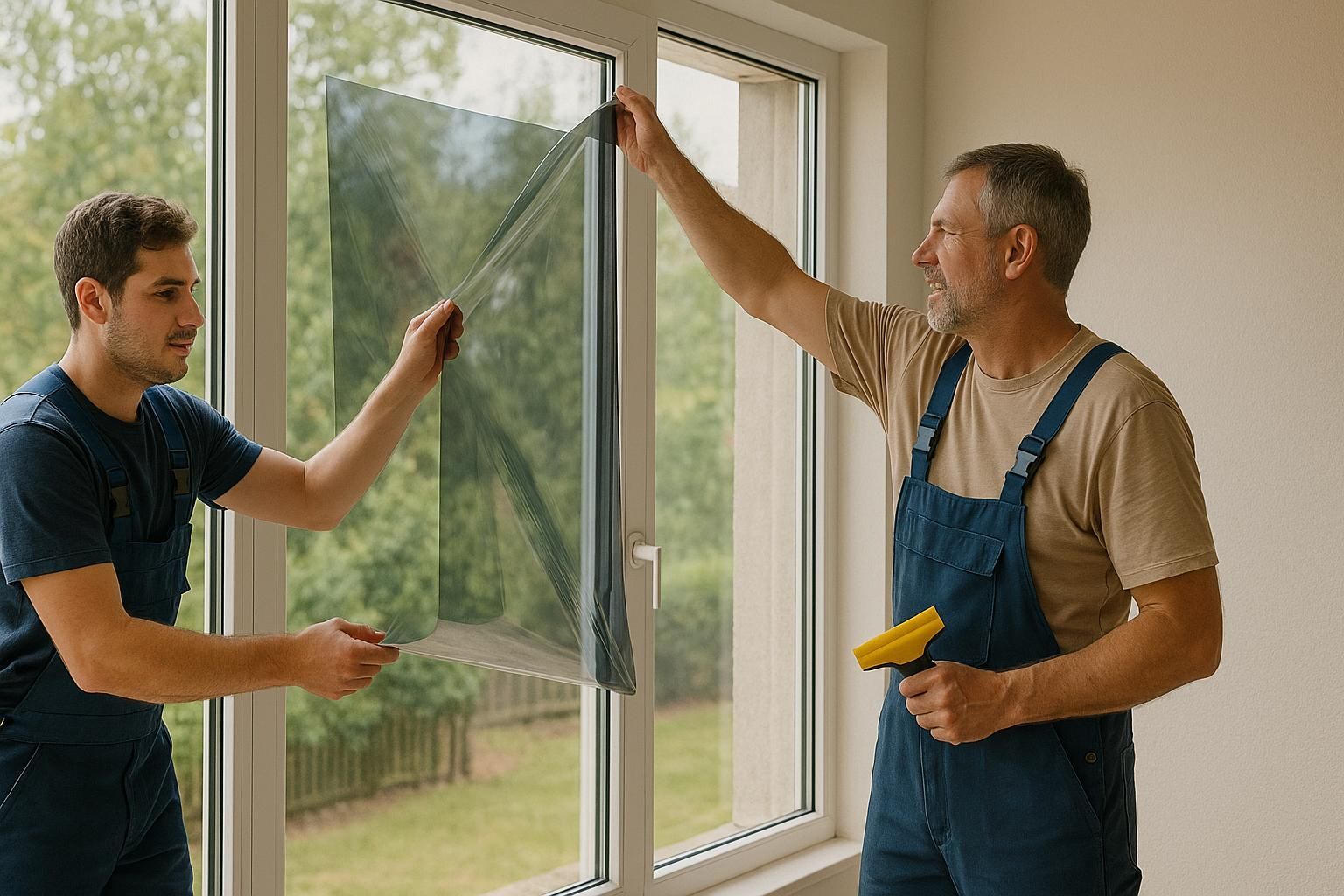
The quality of both the film and the installation directly affects real-world performance. A premium product like Vista solar control film, properly installed by a certified LLumar SelectPro dealer, will perform consistently over its full warranty period. Inferior films or improper installation can result in adhesive failure, peeling, bubbling, and performance degradation over time.
Building Envelope and HVAC
A building with poor insulation, air leaks, or an undersized HVAC system will not experience the same comfort gains as a well-sealed building. Solar film reduces the heat entering through glass, but if heat is entering through many other paths simultaneously, the overall room temperature improvement will be less pronounced. Film is most effective as part of a comprehensive approach to building comfort.
Solar Window Film Performance Comparison
The table below compares standard dyed film, mid-grade solar film, and premium Vista solar control film across the key performance metrics that determine real-world heat reduction.
| Film Type | Total Solar Energy Rejected (TSER) | Infrared (IR) Heat Rejection | UV Rejection | Visible Light Transmission | Glare Reduction | Interior Temperature Impact | Typical Lifespan / Warranty |
|---|---|---|---|---|---|---|---|
| Standard Dyed Film | 30 to 45% | Moderate (40 to 55%) | Up to 95% | 25 to 50% | Moderate | Modest improvement, limited on high-exposure windows | 3 to 7 years / limited or none |
| Mid-Grade Solar Film | 45 to 65% | Good (55 to 75%) | Up to 99% | 20 to 55% | Good | Noticeable improvement on most exposures | 7 to 12 years / limited |
| Vista Solar Control Film (Premium) | Up to 79% | Excellent (up to 97%+) | Up to 99% | Range of options (15 to 70%+) | Excellent | Significant and measurable improvement on all exposures | Lifetime residential / manufacturer-backed commercial |
The table below compares expected heat reduction and energy savings between residential and commercial applications of solar window film to help homeowners and business owners benchmark realistic outcomes for their specific situations.
| Application | Primary Heat Reduction Benefit | Typical Temperature Improvement Near Glass | Expected Energy Savings | Most Impactful Windows | Additional Benefits | Typical Payback Period |
|---|---|---|---|---|---|---|
| Residential (Home) | Cooler rooms, reduced hot spots | 10 to 20°F reduction at glass surface; 3 to 8°F room temperature improvement at peak | Variable; meaningful reduction in cooling costs for high-exposure windows | West and south-facing main living areas, sun rooms | UV protection, glare reduction, furniture preservation | 3 to 7 years depending on energy costs and window count |
| Commercial (Business) | Lower energy costs, improved occupant comfort | Similar glass surface reduction; broader room impact due to larger glass area | 5 to 15% reduction in building energy costs (Vista commercial film) | Storefront glass, south/west office facades, conference rooms | Glare reduction, merchandise protection, reduced HVAC cycling | 2 to 5 years in high-exposure commercial applications |
Frequently Asked Questions
How much heat can solar window film actually block?
A premium solar control film can reject up to 79 percent of total solar energy entering through treated glass. In real-world conditions, this translates to a surface temperature reduction of 10 to 20 degrees Fahrenheit on the glass and a measurable reduction in room temperature near treated windows during peak sun hours.
What does total solar energy rejected mean?
Total Solar Energy Rejected (TSER) is the percentage of incoming solar energy that a film prevents from entering a space as heat. It includes both reflected solar radiation and absorbed energy that is re-radiated outward. A TSER of 79 percent means that 79 out of every 100 units of solar energy that strikes the treated glass is rejected rather than transmitted inward.
Does darker film always block more heat?
Not necessarily. Visible darkness relates to visible light transmission, which is only one portion of the solar spectrum. Premium ceramic films can achieve very high infrared rejection ratings while maintaining relatively high visible light transmission, meaning they block more heat than a darker but lower-technology film. The TSER and IR rejection values are more meaningful performance indicators than visible darkness alone.
How much cooler does a room feel with solar film installed?
The perceived comfort improvement depends on the room, its size, window orientation, and the film selected. In rooms with significant west or south-facing glass, occupants commonly report a noticeably cooler and more comfortable environment, particularly during afternoon hours. Overall room temperature improvements of 3 to 8 degrees Fahrenheit are realistic in well-suited applications with premium film.
Does solar film block infrared heat or just visible light?
Quality solar control films, especially ceramic and nano-ceramic products like the Vista line, are specifically engineered to block infrared radiation, which is the primary heat-producing portion of the solar spectrum. A premium film can reject 95 percent or more of infrared energy. Visible light transmission and heat rejection are separate performance characteristics and can be optimized independently with the right film technology.
How does solar film compare to low-E replacement windows for heat reduction?
Low-E replacement windows are an excellent long-term investment but involve significant upfront cost and installation disruption. Solar film applied to existing windows can deliver comparable solar heat gain reduction at a fraction of the cost. For homeowners and businesses with relatively recent windows that are structurally sound, film is often the more practical and cost-effective path to improved solar performance.
Will solar film lower how hard my HVAC system has to work?
Yes, in most cases. By reducing the solar heat load entering through glass during peak sun hours, solar film reduces the cooling demand on your HVAC system. This means shorter run times, lower peak loads, and reduced wear over the cooling season. The degree of impact depends on the proportion of your building's heat load that comes through glass versus other sources.
Does window orientation affect how much heat film blocks?
Yes, significantly. South- and west-facing windows in the Asheville, Knoxville, and Greenville region receive the highest solar heat loads and will show the most dramatic improvement from solar film. North-facing windows receive minimal direct solar radiation and will benefit less from heat reduction, though UV and glare benefits still apply to all orientations.
Do all windows need film to notice a difference, or just the sunniest ones?
For maximum comfort improvement, treating the highest-exposure windows delivers the most noticeable results. In most homes and businesses, this means focusing on south- and west-facing glass first. You may find that treating these priority windows alone produces a meaningful improvement in comfort and energy use, with the option to expand to other windows later.
Does solar film help in winter as well as summer?
Solar film primarily benefits cooling-dominated climates and seasons. In winter, some solar heat gain through south-facing windows is actually desirable for passive heating. However, most premium solar films still provide UV protection and glare reduction year-round. In the Southern Appalachian region, where summers are long and cooling costs are significant, the net annual benefit of solar film is strongly positive for most properties.
How long does it take to notice a temperature difference after installation?
The temperature and comfort difference is typically noticeable within the first sunny day after installation. The adhesive continues to cure for several weeks after installation, and film performance reaches its full rated specification as the curing process completes. Most installers recommend allowing 30 days for full cure before making a final assessment of the film's performance.
Does humidity or climate affect how well solar film performs?
The performance metrics of solar film are measured under standardized conditions and do not vary significantly with humidity. However, high humidity can affect the comfort perception in a room independently of the film's heat rejection. In humid climates like Western North Carolina and East Tennessee, reducing radiant heat through film is particularly beneficial because it reduces the thermal stress on occupants even when absolute temperatures are moderate.
How long does solar window film last before it needs replacing?
Premium professionally installed solar control film from brands like Vista typically lasts 10 to 20 years or more. Products installed by authorized LLumar SelectPro dealers like EcoArc come with manufacturer warranty support covering adhesive failure, bubbling, peeling, and significant performance degradation. The warranty terms vary by product and application type.
Is solar film worth it for a home versus a commercial building?
Both residential and commercial applications offer a strong value proposition, but the financial payback is often faster for commercial buildings because of higher energy costs, larger glass areas, and more consistent occupancy patterns. For homeowners, the primary value driver is comfort improvement alongside energy savings. For business owners, the combination of measurable energy cost reduction and occupant comfort improvement makes solar film a compelling operational investment.
How do I know how much heat reduction I could expect for my property?
The best way to get an accurate estimate is to schedule a consultation with EcoArc. During the consultation, a technician will assess your window orientations, glass types, existing conditions, and comfort goals. Based on that assessment, they can recommend specific Vista solar control film products and provide realistic expectations for heat reduction, glare improvement, and energy savings tailored to your property.
See the Real Difference Solar Window Film Can Make for Your Property
Solar window film is not a gimmick. A premium product like Vista solar control film, professionally installed by a certified dealer, can reject up to 79 percent of the solar energy that would otherwise enter your home or business as heat. For buildings in Asheville, Knoxville, Greenville, and across Western North Carolina, East Tennessee, and Upstate South Carolina, where seasonal sun exposure is significant and cooling costs are real, that level of performance translates directly into more comfortable spaces and lower energy bills.
For homeowners, the benefit shows up as cooler rooms, reduced glare, protected furnishings, and an HVAC system that does not have to work as hard through the summer. For business owners, it means lower utility costs, more productive and comfortable employees, better customer experiences, and protection for merchandise and interior investments. Vista commercial solar film consistently delivers 5 to 15 percent energy cost savings in well-suited commercial applications, a figure that adds up to a meaningful return over the life of the film.
EcoArc Home and Office Window Tinting is a LLumar SelectPro Dealer serving homeowners and businesses throughout Asheville, Knoxville, Greenville, and the surrounding region. As an authorized Vista dealer, EcoArc provides expert consultations, precise professional installation, and manufacturer-backed warranty coverage on every job.
If you are ready to find out exactly how much heat solar film could block in your home or building, contact EcoArc today for a free estimate. The difference in comfort and cost is measurable, and the right Vista solar control solution is ready for your property.